If you use an above-knee prosthesis—or you're preparing to receive your first one—you may have heard about microprocessor knees and wondered whether the technology is really worth it.
Do they help you walk better? Are they safer? Can they make stairs, ramps, or uneven ground easier? And perhaps most importantly: Is a microprocessor knee right for you?
Microprocessor-controlled prosthetic knees, often called MPKs, use sensors, software, and electronically controlled resistance to continuously respond to the way you are moving. For the right patient, this technology may provide meaningful improvements in stability, confidence, mobility, and everyday function.
But more advanced technology does not automatically mean it is the best choice for everyone.
The right prosthetic knee depends on your mobility, health, lifestyle, environment, goals, and individual needs.
Let's look at how microprocessor knees work, how they compare with traditional prosthetic knees, and what you should consider when deciding whether an MPK may be worth exploring.
What Is a Microprocessor Knee?
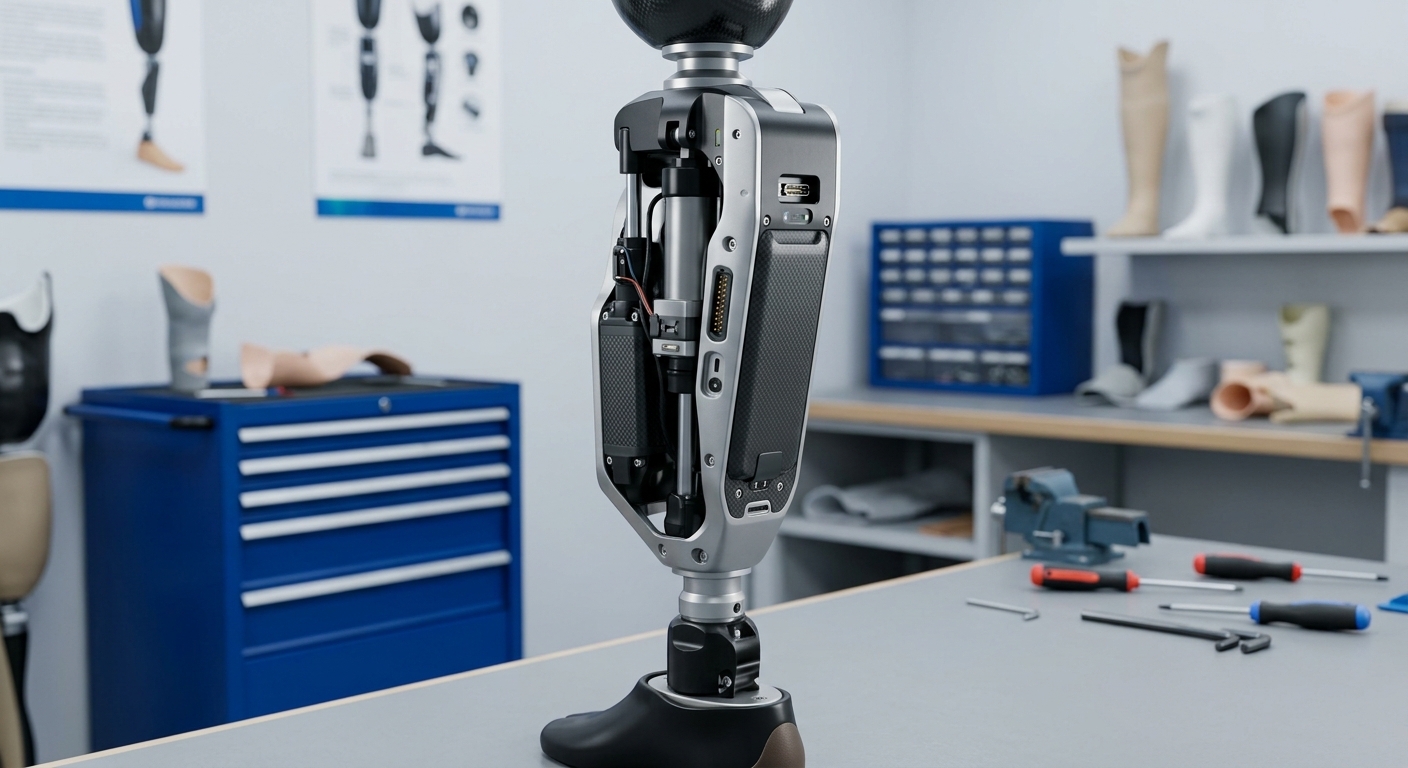
A microprocessor knee is a prosthetic knee joint designed primarily for people with an amputation at or above the knee.
Unlike a purely mechanical prosthetic knee, an MPK contains sensors and a microprocessor that monitor movement and make rapid adjustments to the knee's resistance while the person is standing and walking.
Think of it less as a knee that simply bends and more as a knee that is constantly responding to how you are moving.
Depending on the specific system, sensors may monitor factors such as movement, load, knee position, and walking speed. The microprocessor uses this information to control the knee's resistance during different phases of walking.
These adjustments happen continuously as you move.
The result is a prosthetic knee that can adapt more dynamically to changing walking conditions.
How Is a Microprocessor Knee Different From a Mechanical Prosthetic Knee?
Both mechanical knees and microprocessor knees can be excellent solutions when properly selected and fitted.
The major difference is how the knee responds to movement.
A traditional mechanical prosthetic knee relies on mechanical, hydraulic, or pneumatic systems that are adjusted by the prosthetist to provide appropriate resistance and stability.
A microprocessor knee adds electronic sensors and computer-controlled adjustments. Instead of relying only on predetermined mechanical settings, the MPK can continuously monitor movement and alter resistance based on what is happening during each step.
That ability can become particularly valuable when everyday life becomes less predictable.
Walking across a perfectly flat hallway is one thing. Walking through a parking lot, changing speeds, stepping onto grass, navigating a ramp, or recovering from an unexpected stumble is another.
What Does the Microprocessor Actually Do?
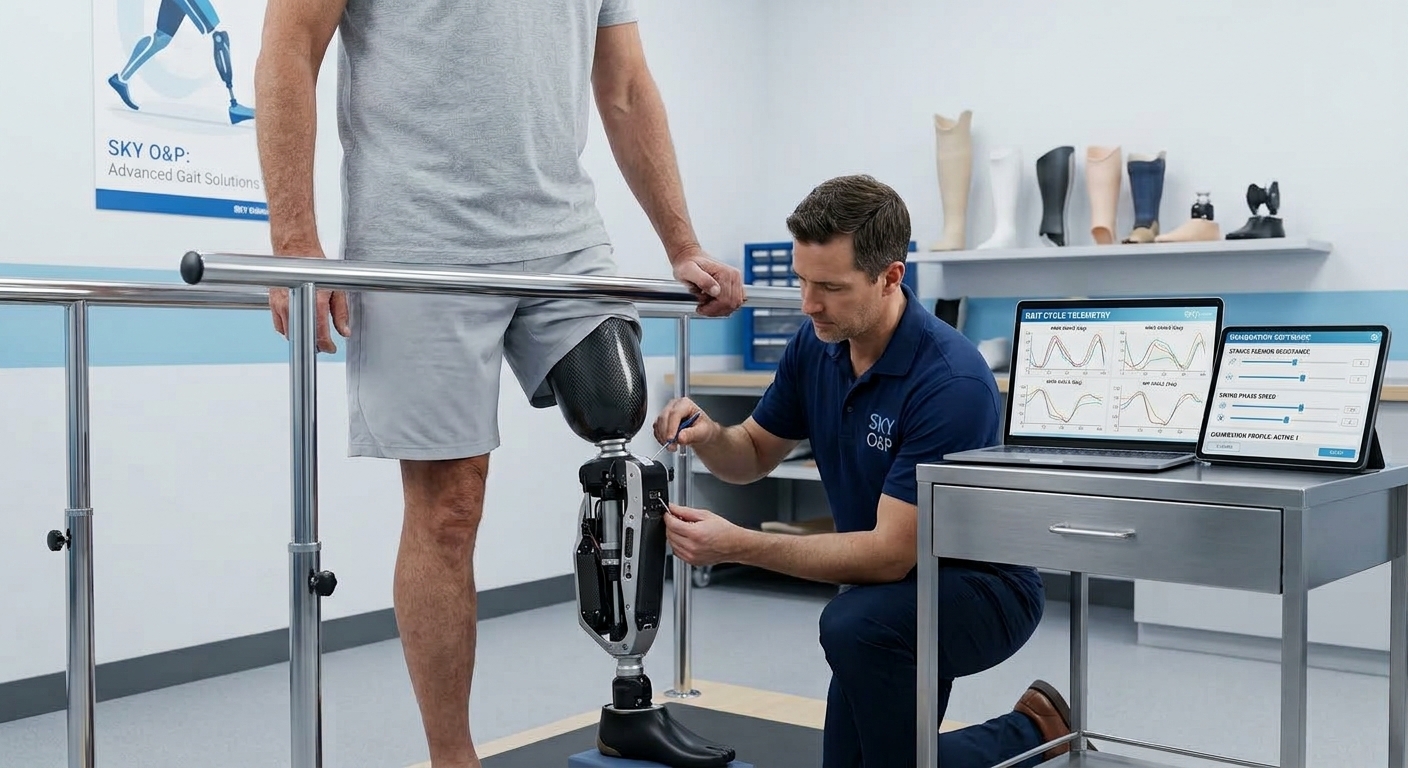
Despite the name, the microprocessor is not moving the leg for you. Instead, in most MPK systems, it helps control how the knee responds during standing and walking.
As you move, sensors gather information about what is happening with the prosthesis. The system can then adjust resistance at the knee based on the situation.
For example, the knee may respond differently when you are:
- Standing
- Walking slowly
- Walking faster
- Changing speeds
- Navigating uneven terrain
- Walking on a slope or ramp
- Beginning or ending a step
- Encountering an unexpected interruption in your gait
Some systems also include features designed to recognize a stumble and increase resistance to help provide greater stability.
Features vary considerably by manufacturer and model, which is one reason prosthetic knee selection should be based on the individual rather than simply choosing the newest technology.
What Are the Potential Benefits of a Microprocessor Knee?

For appropriately selected patients, one of the biggest advantages of an MPK is its ability to respond to changing conditions. Research comparing microprocessor-controlled and non-microprocessor knees has found potential benefits in areas including mobility, walking confidence, navigating uneven terrain, and reducing falls.
Greater Stability and Confidence
For many above-knee prosthetic users, stability is one of the most important considerations. Because an MPK continually monitors movement and adjusts resistance, it may provide additional support when walking conditions change unexpectedly. That can translate into something extremely important: confidence. Feeling more confident in the knee may allow some patients to concentrate less on every individual step and more on where they are going and what they are doing.
Reduced Risk of Stumbles and Falls
Falls are an important concern for people living with lower-limb loss. Microprocessor knee technology has been associated with improvements in balance and reductions in falls among appropriately selected users. Certain MPKs also include stumble-recovery technology designed to detect an interruption in normal gait and respond by increasing knee resistance. No prosthetic knee can eliminate the possibility of falling, but improved stability and responsiveness can be meaningful considerations when selecting a prosthetic knee.
Adapting to Different Walking Speeds
People rarely walk at exactly the same speed all day. You may walk slowly through your home, move faster through a parking lot, speed up to cross a street, or change pace while walking alongside someone else. A microprocessor knee can adjust to changes in walking speed, which may allow movement to feel more natural across different situations.
Uneven Ground, Slopes, and Everyday Obstacles
Real life is not a rehabilitation hallway. There are sidewalks, grass, ramps, driveways, curbs, crowded stores, uneven pavement, and countless other environments. For some patients, the ability of an MPK to continuously adapt can improve confidence and mobility when navigating these changing conditions. Depending on the knee and the patient's abilities, certain systems may also provide additional functionality for ramps or stairs.
Who May Benefit From a Microprocessor Knee?
There isn't a single checklist that determines whether every person should receive an MPK. Your prosthetist evaluates the complete picture.
That can include:
- Your current mobility
- Your potential mobility
- Strength and balance
- History or risk of falls
- Your ability to use your current prosthesis
- Work requirements
- Home and community environments
- Activities of daily living
- Changes in walking speed
- Uneven terrain you regularly encounter
- Other medical conditions
- Personal mobility goals
MPKs aren't only something to discuss when receiving your first prosthesis. Experienced prosthetic users who have been using a mechanical knee may also benefit from an evaluation to determine whether newer technology could better support their current lifestyle and goals.
Your life may have changed since your original prosthesis was prescribed. Your prosthetic technology may be able to change with it.
Is a Microprocessor Knee Only for Highly Active People?
Not necessarily. This is an important misconception.
Microprocessor knees are often associated with highly active prosthetic users, but mobility and safety needs vary considerably.
Clinical evidence has shown that some people with more limited community mobility can also benefit from microprocessor technology, particularly in areas such as stability, fall reduction, walking confidence, and navigating different environments.
The question therefore isn't simply: "Am I active enough for a microprocessor knee?"
A better question is: "Would this technology meaningfully improve my safety, mobility, independence, or ability to perform everyday activities?"
That is something you and your prosthetic care team can evaluate together.
Who May Not Need a Microprocessor Knee?
Microprocessor technology is impressive, but that doesn't make it necessary for every above-knee prosthetic user.
A well-selected mechanical knee may meet a patient's needs very effectively.
Other considerations may include whether the patient can safely operate and maintain the device, whether the technology addresses a meaningful functional need, overall health and mobility, and whether the benefits justify the additional complexity.
Most MPKs also require regular battery charging.
Ultimately, the goal shouldn't be to prescribe the most technologically advanced knee available. The goal should be to select the most appropriate knee for the person using it.
Microprocessor Knee vs. Mechanical Knee: What's the Difference?
| Feature | Mechanical Prosthetic Knee | Microprocessor Knee |
|---|---|---|
| Control | Uses mechanical, hydraulic, or pneumatic control | Adds sensors and computer-controlled resistance |
| Settings | Settings are configured by the prosthetist | Can continuously adapt resistance while the user moves |
| Performance | Can provide effective stability and mobility | May provide additional adaptability to changing conditions |
| Processing | Does not require electronic processing | Continuously processes movement information |
| Charging | Generally does not require daily charging | Most systems require regular charging |
| Suitability | May be appropriate for many users | May offer additional benefits for certain functional and safety needs |
Neither column represents a "good" knee or a "bad" knee. They represent different technologies designed to meet different needs.
What About Stairs, Ramps, and Uneven Terrain?
These are some of the most common situations patients ask about when considering advanced prosthetic technology.
Certain microprocessor knees can provide more controlled resistance when navigating slopes, ramps, or changes in terrain.
Some systems may also provide functionality that assists with stair negotiation.
However, capabilities vary substantially among different MPK models, and technology alone does not determine whether a person can safely perform a particular activity.
Your strength, balance, prosthetic fit, experience, overall health, and training all matter.
If stairs, ramps, uneven terrain, work environments, or specific recreational activities are important to you, tell your prosthetist. Those details should be part of the conversation when selecting your prosthetic components.
What Are the Downsides of a Microprocessor Knee?
It's easy to focus only on the benefits of advanced prosthetic technology, but there are practical considerations too.
Charging
Most microprocessor knees rely on rechargeable batteries and need to be charged regularly. For someone considering an MPK, managing the charging routine becomes part of living with the device.
Water and Environmental Exposure
Water resistance varies by manufacturer and model. Some devices are designed to tolerate greater exposure than others. Never assume that an electronic prosthetic knee can be submerged or exposed to water simply because another MPK can. Ask specifically about the limitations of the model you are considering.
Maintenance and Service
An MPK contains sophisticated electronic and mechanical components. Regular prosthetic follow-up remains important, and service requirements can differ from those of a simpler mechanical knee.
Cost and Insurance
Microprocessor knees generally represent a more advanced—and more expensive—prosthetic technology. Insurance coverage varies depending on the patient's plan, medical necessity, documentation, functional needs, and other requirements. Cost alone, however, shouldn't determine whether you ask about the technology. If an MPK may be clinically appropriate, the next step is to understand your options and determine what your insurance plan may cover.
Are Microprocessor Knees Covered by Insurance?
Coverage varies by insurance company and individual plan. Medicare and other insurers use medical-necessity and functional criteria when determining coverage for prosthetic components, and appropriate clinical documentation is important. Coverage criteria can also change over time. Instead of assuming that an MPK is either covered or not covered, speak with your prosthetic care team. SKY O&P can help you explore your prosthetic options and verify your individual insurance benefits and coverage requirements.
Are Microprocessor Knees Worth It?
For the right person, they certainly can be.
But the real question isn't whether microprocessor knees are worth the technology or the price in general.
It is: What could this technology allow you to do that you cannot do—or cannot do as safely or confidently—with your current prosthetic knee?
Maybe it's navigating the uneven ground between your car and your workplace. Maybe it's feeling more secure when your walking speed changes. Maybe it's reducing your concern about stumbling. Maybe it's keeping up with your family. Maybe it's returning to activities that are important to you.
Or perhaps your current mechanical knee already allows you to do everything you need comfortably and safely.
That's why the decision should begin with your life—not with a particular brand, model, or piece of technology.
Choosing the Right Prosthetic Knee Starts With a Conversation
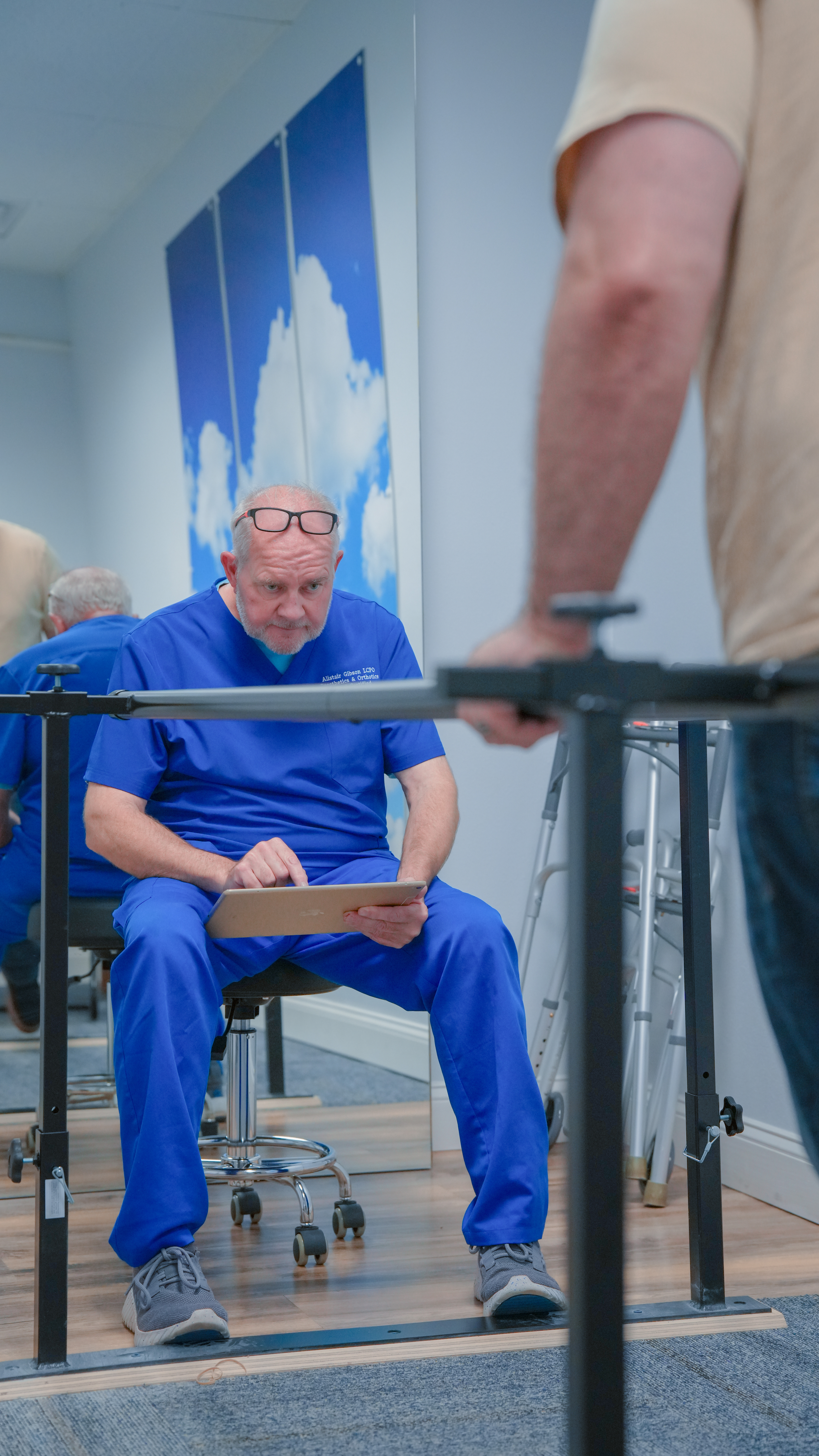
There are multiple microprocessor knee systems available today, each with different features, capabilities, limitations, and intended users.
SKY O&P does not believe the answer is simply to choose the most advanced device.
The goal is to understand you. Your health. Your mobility. Your challenges. Your environment. And what you want to be able to do.
Whether you are preparing for your first above-knee prosthesis or have years of experience and are wondering if it's time to explore an upgrade, a prosthetic evaluation can help determine which technology may be appropriate for you.
Frequently Asked Questions About Microprocessor Knees
What is a microprocessor knee?
A microprocessor knee is a prosthetic knee that uses sensors, a microprocessor, and electronically controlled resistance to continuously respond to changes in the user's movement. The technology is designed to help the knee adapt to different phases and conditions of walking.
Is a microprocessor knee better than a mechanical knee?
Not necessarily for every person. MPKs can provide important benefits for certain patients, including increased adaptability, stability, and confidence. A mechanical knee may still be an excellent choice depending on the patient's health, mobility, goals, and functional needs.
Can a microprocessor knee help prevent falls?
Research has associated microprocessor knees with reduced falls and improved balance in certain populations of above-knee prosthetic users. However, no prosthetic device can eliminate fall risk.
Can I switch from a mechanical knee to a microprocessor knee?
Potentially. Experienced prosthetic users can be evaluated to determine whether an MPK could provide meaningful functional or safety benefits compared with their current knee.
Do microprocessor knees need to be charged?
Most do. Battery life and charging requirements vary by manufacturer and model. Your prosthetist can explain the requirements of the specific device being considered.
Can you shower or swim with a microprocessor knee?
It depends on the specific device. Water-resistance ratings vary significantly between models. Ask your prosthetist about water exposure before using any MPK around showers, pools, beaches, or other wet environments.
Does insurance cover microprocessor knees?
Coverage varies by insurer, plan, medical necessity, functional needs, and documentation requirements. SKY O&P can help verify your individual insurance benefits and explain the process for the technology being considered.
Which microprocessor knee is best?
There isn't one microprocessor knee that is best for everyone. Different systems offer different features and capabilities. The best option depends on your health, mobility, lifestyle, environment, goals, and clinical needs.
Disclaimer: This article is intended for general educational purposes and is not a substitute for individualized medical advice or a prosthetic evaluation. Prosthetic recommendations, capabilities, and insurance coverage vary by patient and device.
PERSONALIZED PROSTHETIC CARE IN CENTRAL FLORIDA
Wondering If a Microprocessor Knee Is Right for You?
You don't need to know which brand or model you need before talking with a prosthetist. That's what the evaluation is for.
Whether you are considering your first prosthetic knee or wondering whether it's time to upgrade your current prosthesis, SKY O&P can help you explore the options available and determine which technology may best support your mobility goals.
SKY O&P provides personalized prosthetic care throughout Central Florida, serving patients in Maitland, Kissimmee, Ocala, Minneola, DeLand, and surrounding communities.
Schedule a Consultation Explore Prosthetic Services